 BNB$554.65
 TRX$0.3051
 HYPE$62.14
 ZEC$786.73
 XMR$490.92
 DOGE$0.0549
Learn
Learn on CoinLab: Bitcoin and crypto market news, explainers and analysis with numbers and links to primary sources.
Crypto inheritance planning: how to pass bitcoin to heirs
Crypto inheritance planning: exchange vs self-custody, seed phrase, multisig and timelocks, a 6-step plan and a 0.5 BTC example priced on Nov 20, 2026.


Crypto airdrops explained: eligibility, costs and phishing
Learn how crypto airdrop eligibility works, calculate participation costs and distinguish receiving tokens from spending approvals, phishing and wallet risks.

Bitcoin multisig wallet: how it works and how to set one up
Bitcoin multisig wallet guide: 2-of-3 vs 3-of-5, step-by-step setup, why the descriptor matters, fee cost on Nov 14, 2026, and the lesson of the Bybit hack.
What are altcoins? Types, risks and how to evaluate them
What are altcoins? Types, coin vs token, and 7 steps to evaluate one. On Nov. 11, 2026, altcoins made up 40.2% of the $2.5T crypto market cap.


Bitcoin transaction confirmations: how many you need and UTXOs
Bitcoin transaction confirmations explained: why 6 blocks, what exchanges require and how UTXOs drive fees. On Nov 8, 2026, six blocks took just 37 minutes.
Bitcoin dollar cost averaging: how DCA works and what it does
Bitcoin DCA explained: a $100-a-week backtest over 1–5 years on Binance prices to Nov 6, 2026, how it compares with a lump sum, fees, taxes and common mistakes.
How many bitcoins are there? Supply, mined and lost coins
How many bitcoins are there: the cap is 20,999,999.9769 BTC, 20.11M (95.8%) were mined as of Nov 6, 2026, and 2.6M–3.8M are estimated lost forever.

What is bitcoin? How it works, supply and who created it
What is bitcoin, explained simply: keys, blockchain, mining and the 21 million cap. As of Nov 6, 2026, 20.1M BTC had been issued, 95.7% of all coins.
Crypto order book explained: bids, asks, depth and walls
Crypto order book explained: bids and asks, spread, market depth, slippage, buy and sell walls, spoofing. Worked example from the Binance BTC book, Nov 4, 2026.
Crypto order types explained: market, limit, stop and OCO
Crypto order types explained: market vs limit, how stop-loss, stop-limit, OCO and post-only work, and what slippage costs. Worked example with BTC, Nov 2026.
What is DeFi explained: protocols, yields and risks
What is DeFi explained simply: how Aave, Uniswap and Lido work, where 2–5% yields come from and where users lose money. DeFi TVL was $81.6B on Nov. 3, 2026.
USDT vs USDC: key differences, reserves and risks
USDT vs USDC compared: issuer, reserves, chains and regulation. As of Nov. 2, 2026, $178.8B USDT and $71.2B USDC were in circulation. Table and risks.


Bitcoin address types: 1, 3, bc1q, bc1p and how to check them
Bitcoin address types explained: Legacy, P2SH, Native SegWit and Taproot, which is cheapest to spend, and how to verify an address before you send BTC.
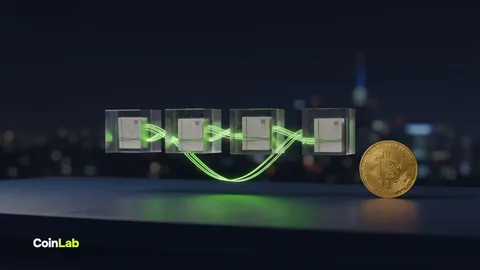
What is blockchain? How it works, explained step by step
What is blockchain, explained simply: what's inside a block, why the chain is hard to tamper with, mining vs staking, with real bitcoin block 973,946.
Crypto staking explained: how it works, yields and risks
Crypto staking explained: where the yield comes from, how to work out real returns and what can go wrong. Figures for Oct 29, 2026: ETH 2.5% APR, SOL 5.99%.
Crypto scams: how to spot the 9 most common schemes
Crypto scams cost US victims $11.37B in 2025 (FBI). The nine most common schemes, seven red flags, a five-minute check and what to do if you already sent money.
Bitcoin Lightning Network: how fast, cheap payments work
Bitcoin Lightning Network explained: how payment channels work, what a payment costs, who it suits and the risks. Public channels hold about 3,800 BTC.
What is a seed phrase: how it works and how to store it
What is a seed phrase: how 12 or 24 BIP-39 words hold your keys, passphrases and Shamir backups, safe storage methods and the mistakes that get coins stolen.

How to buy bitcoin: methods, fees and steps for beginners
How to buy bitcoin on an exchange, via an ETF, P2P or an ATM: seven steps, a fee comparison on a $100 buy from October 25, 2026, and common mistakes.
Ethereum vs bitcoin: key differences in purpose, supply, risk
Ethereum vs bitcoin compared: security, supply cap, fee burn and price. Side-by-side table and live data for Oct 22, 2026: ETH supply grows 0.86% a year.
Bitcoin cold wallet: what it is and how to set one up
Bitcoin cold wallet guide: storage types, BIP-39 seed phrases, step-by-step setup, real withdrawal costs on Oct 22, 2026, and mistakes that get coins stolen.
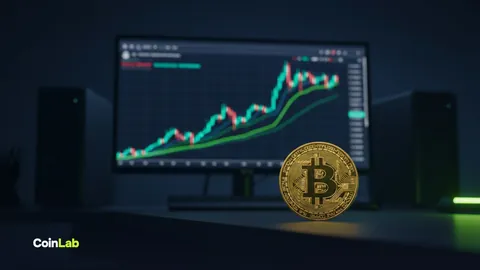
Bitcoin RSI and MACD explained: how to read RSI, MACD and EMA
Bitcoin RSI, MACD and EMA explained: formulas, signals and an 8-year backtest. As of Oct 20, 2026, RSI was 46.6 and MACD sat below its signal line.
Bitcoin fractals: what they are and do they actually work
Bitcoin fractals explained: the Williams fractal and historical chart analogs. On Oct 19, 2026, three windows disagree, medians from −8.6% to +12%.

Google Cuts Quantum Errors 40x on Willow Chip, Bitcoin Remains Safe
Google's Willow chip hit 99.99% T-state fidelity in a Science paper, cutting magic-state errors 40-fold. Breaking Bitcoin's cryptography still requires far greater precision.
Bitcoin halving: what it is, dates and price impact
The Bitcoin halving cuts the block reward in half every 210,000 blocks. All halving dates, price before and after, and why the next one lands in April 2028.