 XRP$0.9323
 TRX$0.3050
 ZEC$790.97
 XMR$488.74
 DOGE$0.0551
Bitcoin and crypto explainers — page 2
Explainers and deep dives: how to read market data, derivatives, on-chain metrics and Bitcoin cycles.

MiCA regulation explained: how the EU rules crypto
MiCA regulation explained: who needs an EU crypto licence, what stablecoin issuers must hold, why USDT left EU exchanges and how to check ESMA's register.


Crypto margin trading explained: leverage, cross vs isolated
Crypto margin trading explained: how leverage works, cross vs isolated margin, where liquidation sits and carry costs, with an example on Nov 9, 2026 data.


Bitcoin options explained: calls, puts and the Greeks
Bitcoin options for beginners: how calls and puts work, what drives the premium, what delta and theta mean, and where to trade, with live Deribit prices.
Bitcoin SOPR and NUPL explained: reading holder profits
Bitcoin SOPR shows if coins sell at a profit; NUPL shows the market's paper gains. Formulas, zones, history and a Nov 1, 2026 example: SOPR 0.994, NUPL 0.31.
Bitcoin transaction confirmations: how many you need and UTXOs
Bitcoin transaction confirmations explained: why 6 blocks, what exchanges require and how UTXOs drive fees. On Nov 8, 2026, six blocks took just 37 minutes.
Bitcoin vs gold: digital gold, correlation and returns
Bitcoin vs gold compared: supply, volatility, a +0.11 correlation since 2017 and a +0.55 record in 2026, yearly returns and 18.6 oz of gold per BTC on Nov 6.
Bitcoin dollar cost averaging: how DCA works and what it does
Bitcoin DCA explained: a $100-a-week backtest over 1–5 years on Binance prices to Nov 6, 2026, how it compares with a lump sum, fees, taxes and common mistakes.
How many bitcoins are there? Supply, mined and lost coins
How many bitcoins are there: the cap is 20,999,999.9769 BTC, 20.11M (95.8%) were mined as of Nov 6, 2026, and 2.6M–3.8M are estimated lost forever.

What is bitcoin? How it works, supply and who created it
What is bitcoin, explained simply: keys, blockchain, mining and the 21 million cap. As of Nov 6, 2026, 20.1M BTC had been issued, 95.7% of all coins.

Crypto tax in Canada, Australia and India: 2026 rules
Crypto tax in Canada, Australia and India: half the gain taxed, a 50% discount after 12 months, a flat 30% plus 1% TDS. Worked example on November 2026 prices.
Bitcoin annual returns by year: 2011–2026 table and drawdowns
Bitcoin annual returns by year since 2011: 11 of 15 years up, median +121%, worst years down 74%. Peak-to-trough drawdowns, 5- and 10-year CAGR, 2026 so far.

Bitcoin whale tracking: how to follow large BTC wallets
Bitcoin whales hold 1,000+ BTC. How to track their wallets with Whale Alert, Arkham and CryptoQuant, read exchange transfers and avoid exchange-shuffle traps.
Crypto order book explained: bids, asks, depth and walls
Crypto order book explained: bids and asks, spread, market depth, slippage, buy and sell walls, spoofing. Worked example from the Binance BTC book, Nov 4, 2026.
Crypto order types explained: market, limit, stop and OCO
Crypto order types explained: market vs limit, how stop-loss, stop-limit, OCO and post-only work, and what slippage costs. Worked example with BTC, Nov 2026.
What is DeFi explained: protocols, yields and risks
What is DeFi explained simply: how Aave, Uniswap and Lido work, where 2–5% yields come from and where users lose money. DeFi TVL was $81.6B on Nov. 3, 2026.


USDT vs USDC: key differences, reserves and risks
USDT vs USDC compared: issuer, reserves, chains and regulation. As of Nov. 2, 2026, $178.8B USDT and $71.2B USDC were in circulation. Table and risks.
Mercado Bitcoin hack explained: $48.6M stolen, what we know
$48.6M left Mercado Bitcoin wallets across 10 chains (Bitquery), $11.4M frozen. The hacker kept emptying deposit addresses. Timeline and MB's stance.
Bitcoin address types: 1, 3, bc1q, bc1p and how to check them
Bitcoin address types explained: Legacy, P2SH, Native SegWit and Taproot, which is cheapest to spend, and how to verify an address before you send BTC.

b14g hack explained: how 97M CORE was stolen
An attacker pulled 97M CORE (~$1.47M) from b14g on Core with zero-amount withdrawal requests. A timeline, where the funds went and what b14g and Core did.

How bitcoin mining works: from hash to block reward
How bitcoin mining works: what an ASIC really computes, where the 3.125 BTC subsidy and fees come from, why pools exist and what 1 PH/s earns. Block 974,157.
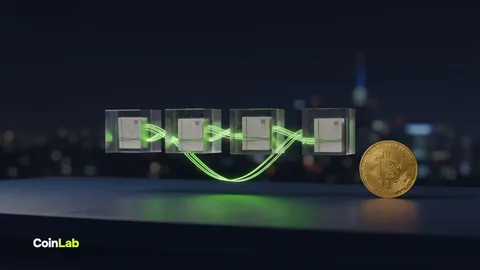
What is blockchain? How it works, explained step by step
What is blockchain, explained simply: what's inside a block, why the chain is hard to tamper with, mining vs staking, with real bitcoin block 973,946.
Bitcoin put/call ratio and options skew: how to read them
Bitcoin put/call ratio is puts divided by calls, by open interest or by volume. What 0.67 meant on October 30, 2026, and how 25-delta options skew differs.
Bitcoin exchange reserves: what outflows really mean
Bitcoin exchange reserves explained: how they are measured, why CryptoQuant shows 2.67M BTC and Santiment 6.5%, what FTX outflows meant and how ETFs distort it.
Binance hack explained: how $6.3B was stolen and what we know
Timeline of the $6.3B Binance hack: attack mechanics and exchange response. November 17 update: 34,279.66 ETH moved, valued at approximately $63M.

Polymarket hack explained: how $2.65M was stolen
Timeline of the Oct. 29 Polymarket hack: a third-party script drained traders, the attacker holds about $2.65M in POL, and Polymarket pledges full refunds.
Crypto staking explained: how it works, yields and risks
Crypto staking explained: where the yield comes from, how to work out real returns and what can go wrong. Figures for Oct 29, 2026: ETH 2.5% APR, SOL 5.99%.

Crypto scams: how to spot the 9 most common schemes
Crypto scams cost US victims $11.37B in 2025 (FBI). The nine most common schemes, seven red flags, a five-minute check and what to do if you already sent money.
Bitcoin realized price: what it shows and how to read it
Bitcoin realized price explained: the market's on-chain average cost basis, the formula, every dip below it since 2011 and a worked example at $54,100 (Oct 27, 2026).

Perpetual futures in crypto: how perps work, step by step
What perpetual futures in crypto are: how perps differ from dated futures, last vs index vs mark price, funding, margin and a worked liquidation example.
Bloom hack explained: how $947K in SOL was stolen
About 9,408 SOL (~$947K) was drained from 49 wallets of Bloom bot users. A timeline of the hack, where the funds went on-chain, and Bloom's full-refund pledge.