 BTC$63,694
 ETH$1,782
 BNB$586.02
 XRP$0.9562
 SOL$72.27
 TRX$0.3064
 HYPE$67.74
 ZEC$922.52
 XMR$503.79
 DOGE$0.0585
Ethereum layer 2 rollups: Arbitrum, Base and Optimism explained
Learn how Ethereum layer 2 rollups work: proofs, fees, bridges and withdrawal timing, with a current comparison of Arbitrum, Base and Optimism.

Contents
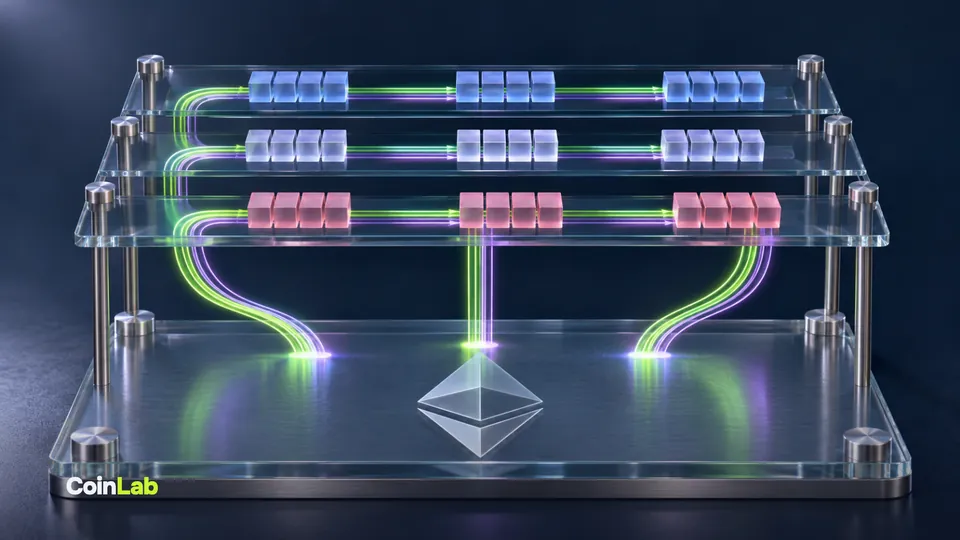
Ethereum layer 2 rollups are networks that execute transactions outside Ethereum's main chain while connecting their results and the data needed for verification back to Ethereum. They spread the cost of using the base layer across many operations. For a user, an L2 is a separate network selected in a wallet, with its own applications, balances, confirmation process and exit route. Arbitrum, Base and Optimism are not interchangeable copies of Ethereum. Their software and proof systems evolve, so a useful comparison starts with their current mechanisms rather than old launch descriptions.
For base-layer context, see the Ethereum and Bitcoin comparison.
How a rollup uses Ethereum's security
On Ethereum itself, nodes execute transactions and verify the resulting state. A rollup moves execution into another environment, groups transactions into batches and uses Ethereum to publish data and verify commitments. This separates much of the computational work from the base layer while keeping the outcome connected to it. Ethereum's optimistic rollup documentation explains this separation between execution, data publication and dispute resolution.
Think of several processing systems reporting to a common settlement layer. Each can process its own activity quickly, but its results must satisfy an agreed verification process. The analogy explains how work is distributed; it does not make every processing system equally reliable. In a real network, data availability, verifier contracts, upgrade authority and the ability to exit without an operator's permission all matter.
A rollup differs from an independent blockchain because of what Ethereum actually verifies, rather than because someone calls it an L2. If the information needed to reconstruct state is held by a separate group, additional trust assumptions arise. The label should therefore be followed by an explanation of the individual network's architecture.
Optimistic, ZK and hybrid proofs
In an optimistic system, a published state claim can be challenged. Someone detecting an incorrect computation can trigger the protocol's dispute procedure. The Arbitrum Nitro description explains transaction ordering and interactive dispute resolution. An honest operator alone is not the entire security model: the verification mechanism must work, and participants must be able to use it within the allowed time.
A ZK rollup submits a proof of a state transition's correctness for a contract to verify. The words “zero knowledge” do not mean that ordinary transfers are automatically private. In this setting, the proof primarily establishes computational validity. Ethereum's ZK-rollup guide distinguishes proofs, transaction data and withdrawal mechanisms.
Hybrid systems combine different approaches. A trusted execution environment, or TEE, relies on hardware and software assumptions; a ZK proof offers another verification path. Combining them is neither simply waiting for objections nor removing every trusted component. A useful explanation asks what happens when the mechanisms agree, disagree or fail to produce a result.
Comparing Arbitrum, Optimism and Base
Arbitrum One uses the optimistic design described in the Nitro documentation. Its stated challenge period is 6.4 days, while the complete withdrawal process also depends on batch publication and assertion timing. This configuration should not be applied to every chain built with Arbitrum technology. Arbitrum Nova's AnyTrust design should also be distinguished from Arbitrum One.
In the OP Stack, the bridge interacts with state claims and dispute games. The OptimismPortal specification describes proving an initiated withdrawal, maturity delays and finalization conditions. A shared interface or common software ancestry does not guarantee identical parameters across all deployments.
Base originally launched with the OP Stack, but current materials describe a separate Base Stack. The Azul announcement explains TEE/ZK multiproofs: either proof type can finalize a proposal independently, while agreement between both enables a faster path. The current Base withdrawal documentation specifies a five-day finalization window with one proof, or one day with both TEE and ZK proofs. These are finalization windows, not a promise about the total elapsed time from every wallet action to receipt of funds.
| What to compare | Arbitrum One | Optimism / OP Stack | Base |
|---|---|---|---|
| Architectural reference | Nitro and assertion disputes | Portal contracts and fault proofs | Base Stack and TEE/ZK multiproofs |
| Exit to Ethereum | Challenge period plus publication and execution steps | Proof, timing conditions and finalization | Three stages; the window depends on proofs |
| Avoid assuming | Every Arbitrum-based chain is identical | Every OP Stack chain shares the same rules | A universal seven-day wait still applies |
What makes up the fee
Cheap execution does not make data publication or exiting the network free. Distinguish the cost of computation inside an L2 from costs associated with Ethereum. Base's fee documentation separates L2 execution and an L1 component. Exact formulas depend on the network and its upgrades; one inexpensive transfer is not a permanent tariff for every application.
EIP-4844 introduced blob transactions, allowing rollups to publish data through a separate mechanism. This helps explain why ordinary Ethereum gas prices and an L2 transaction's cost need not move together. Blobs do not remove the need for available data or correct verification. Cheaper publication is one part of the design, rather than a guarantee about every bridge.
A practical comparison should use the same action on each network. Sending ETH, swapping through a complex pool and minting an NFT consume different resources. The full route may also require deposits, withdrawals or conversions. Comparing only the wallet's “network fee” line can overlook much of the cost of a small transfer.
Fast confirmation is different from a finalized withdrawal
A wallet may quickly show confirmation from the sequencer, the system ordering transactions. Data is subsequently published to Ethereum, the state passes the required verification process, and a withdrawal becomes executable. Those stages should not all be described as “done.” Receiving funds within the same L2 and releasing assets from its canonical bridge on Ethereum require different assurances.
A fast bridge may deliver assets on the destination side earlier by supplying its own liquidity. That does not mean the underlying protocol has abolished its finalization window. The route adds the liquidity provider's terms, fees and contract risks. Products sharing the word “bridge” can therefore have substantially different mechanisms.
Before a transfer, verify the source network, destination network, token address and recipient's support for the route. The same wallet address across several EVM networks does not mean an exchange accepts deposits from every one of them. An Ethereum balance and a Base balance at that address are separate state records. That distinction matters even when the token symbol looks identical.
Limitations
A correct proof does not fix an application bug. A malicious approval or interaction with a vulnerable contract can produce an unwanted outcome through entirely correct execution. Bridge contracts, upgrade administrators and the ability to change rules also deserve separate attention. These are different layers of risk, rather than one binary property called “safe.”
A sequencer outage is not automatically a loss of assets. A network may provide forced inclusion or an exit mechanism, but its accessibility, cost and timing depend on implementation. A mechanism appearing in a design diagram does not establish that every user can immediately invoke it through a familiar interface.
Useful questions include who can upgrade key contracts, which data is published to Ethereum, how an invalid claim is challenged and what happens if the operator stops. Changing permissions and parameters require current documentation. Historical association with a well-known software stack is not a substitute for checking them.
A dated market example
In CoinLab's data snapshot for November 17, 2026, at 12:45 PM ET, BTC was priced at $63,815.47. The Ethereum catalog snapshot at 12:46 PM ET put ETH at $1,780.68. The times are stated separately: these are two dated sources, not a promise of a current quote whenever the article is read.
For illustration only, suppose an interface displays a fee of 0.0001 ETH. At the stated ETH price, its dollar equivalent would be 0.0001 × $1,780.68 = $0.178068, or about $0.18. The 0.0001 ETH amount is an assumed input, not a measured Arbitrum, Base or Optimism tariff or a claim about the cost of any particular transaction.
This calculation shows only conversion from ETH into dollars. ETH's price does not determine an application's gas consumption or data-publication cost, and BTC's price cannot establish those costs either. The broader backdrop is available in the daily brief. Neither price movement nor a low fee alone establishes proof-system quality or an application's reliability.
Frequently asked questions
Do I need a separate wallet for every L2? Many wallets support several EVM networks using one address. You still need to select the network explicitly and check that the application supports it. Matching addresses do not combine balances or replace a bridge.
Do all fees require ARB or OP? Do not infer the payment asset from a network's name or governance token. Check the individual network, application and supported payment method. Protocol governance and paying for execution are separate functions.
Does ZK always mean instant withdrawals? No. Timing depends on proof generation and publication, bridge contracts and additional conditions. The absence of a conventional optimistic challenge window does not promise instantaneous receipt of funds.
Which L2 is safest? There is no universal answer without specifying the task. Assess the network architecture, bridge, upgrade powers and application involved in the actual route. The comparison can change when any of those components is upgraded.
This is not investment advice.



Comments