 BTC$63,594
 ETH$1,801
 BNB$588.97
 XRP$0.9799
 SOL$74.35
 TRX$0.3132
 HYPE$68.18
 ZEC$940.70
 XMR$498.81
 DOGE$0.0593
Bitcoin Ordinals and Runes explained: NFTs and tokens
How Ordinals tracks sats, inscriptions record content and Runes accounts for tokens. A guide to UTXOs, transaction fees, indexers and transfer mistakes.

Contents
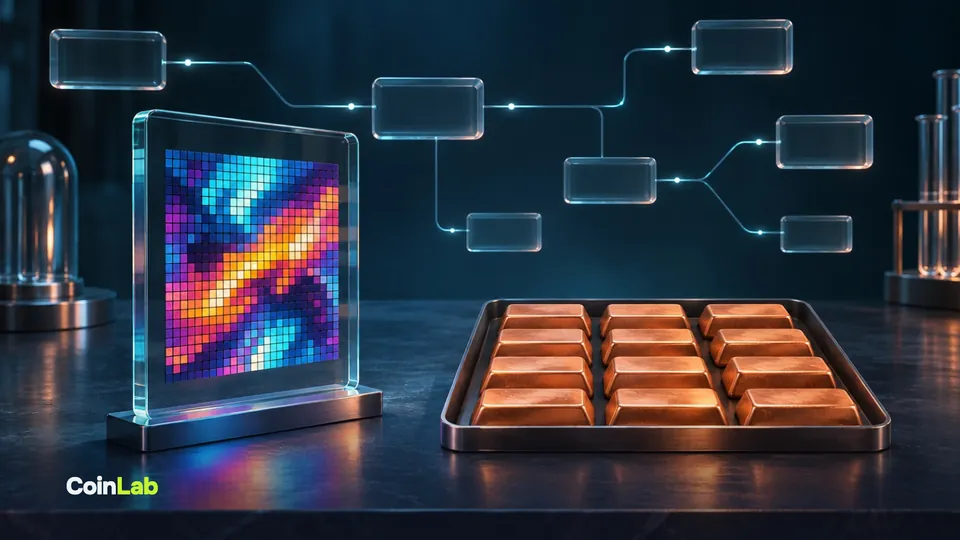
Bitcoin Ordinals and Runes are two ways of interpreting activity on Bitcoin's blockchain. Ordinal theory numbers individual satoshis, while inscriptions associate digital content with particular sats. Runes instead tracks interchangeable token balances on transaction outputs. They share Bitcoin transactions and BTC fees, but they do not represent the same asset model. Understanding them requires separating Bitcoin's consensus rules, an application's indexing rules and whatever market price buyers assign to the resulting objects.
How Ordinals tracks an individual satoshi
A Bitcoin wallet spends unspent transaction outputs, or UTXOs. Spending an output creates new outputs for recipients and often a change output for the sender. Bitcoin validates authorization and amounts; it does not assign a collectible premium to a particular portion of the payment. Our guide to transaction confirmations and UTXOs explains that underlying model.
Ordinal theory adds an ordering convention. Satoshis receive numbers according to when they were mined, and the convention follows them through transaction inputs and outputs using first-in, first-out ordering. An indexer reconstructs that history. The number is not a physical mark embedded in a coin, and it does not change a satoshi's BTC denomination or usefulness for paying fees.
This allows collectors to discuss a particular sat's history, its position within a block or its association with an event. Rarity describes a chosen classification system, rather than a guaranteed market premium. Another buyer may attach no importance to that category. Ordinal theory requires neither a separate blockchain nor a utility token or a change to Bitcoin's consensus rules. Applications add meaning by agreeing to interpret existing transaction data in the same way.
What an inscription records
An inscription combines a content type with a sequence of bytes, according to the inscription documentation. Content is revealed through the spending data of a Taproot output and recorded on-chain. This differs from putting only the address of an ordinary website into a transaction, where the referenced site may subsequently disappear.
The standard process has two stages. A commit transaction creates an output tied to a script; a reveal transaction spends that output and exposes the content. The indexer then determines the inscription's association with a satoshi. An interface may display an image, text or another digital artifact commonly described as an NFT. Numbering a satoshi and inscribing content are nevertheless separate operations: the sat existed before someone published the file.
On-chain storage does not guarantee that a particular explorer will remain available. Rendering depends on software, supported formats and access to the relevant data. Additional resources used by an object also deserve attention. Nor does control of the output containing an inscription automatically transfer copyright in its image. Establishing a collection's provenance and understanding the legal rights involved are separate tasks that a transaction identifier cannot perform by itself.
How Runes represents interchangeable units
Runes supports issuing and transferring units that are interchangeable within a particular issuance. Its central concept is a balance, rather than a different image for every unit. A single transaction output can hold indexed balances of several different runes.
Protocol messages are called runestones and occupy an output with a specified OP_RETURN structure. A message may create an issuance through an etching, mint additional units under open terms, or allocate units to transaction outputs. Bitcoin transaction fees are still paid in BTC, not in the rune being transferred.
An issuance has an identifier derived from its creation block and transaction position. That identifier matters more than an attractive name, ticker or interface logo. Terms may include a premine for the creator, an amount per mint, a cap on the number of mints and a window defined by block heights. An open mint makes an operation available when its conditions are satisfied. It does not establish equitable ownership distribution or promise a liquid secondary market.
Runes does not need to turn every transferred unit into its own inscription. These are distinct interpretations of transaction data. Consequently, a wallet's ability to display inscriptions does not automatically establish that it handles every Runes operation correctly. Support must match the specific asset and operation being attempted.
Comparing BTC, inscriptions and rune balances
This comparison identifies the job a wallet needs to perform. It describes accounting models, rather than ranking assets as investments; the handbook documents the additional token rules.
| Object | What the application follows | Main transfer considerations |
|---|---|---|
| Ordinary BTC | Values of spent and newly created outputs | Destination, fee and change |
| A sat in ordinal theory | The chosen sat's position through transaction history | Ordering and sizes of inputs and outputs |
| An inscription | Digital content associated with a sat | The output holding the object and its spending path |
| Runes | Units of a particular issuance assigned to outputs | Issuance identifier and balance-allocation rules |
An object sharing an address with BTC is not necessarily understood by an exchange. A service may credit an ordinary Bitcoin deposit without crediting an inscription or rune as a separate asset. A compatible-looking address format is insufficient: the receiving service must explicitly support the relevant protocol and operation.
Transaction confirmation and application-level validity are also different questions. A block can contain a valid Bitcoin transaction that a token indexer interprets as an invalid token operation. Checking only whether a transaction is confirmed cannot establish that a particular rune balance reached the intended destination. The additional accounting result needs its own verification.
Checking an object before transferring it
The practical starting point is identifying the output that holds the inscription or token balance. The collecting guide warns that an unaware wallet may select such an output for an ordinary payment, sending a collectible sat to the recipient or into transaction fees.
- Establish the network and asset type: BTC, an inscription or a particular rune issuance.
- Compare the object identifier, transaction and relevant output, rather than relying on a collection name.
- Confirm that both services support the intended operation.
- Review the proposed recipient, change, fee and allocation of any additional assets.
- After confirmation, inspect the result with a compatible indexer. If services disagree, compare their versions and synchronization state first.
These steps do not replace checking the software and its distribution source. A fraudulent interface can show persuasive asset names while substituting a different recipient. A website does not need a seed phrase merely to inspect a public object. Our seed phrase guide explains that separate security boundary.
A small test transaction does not necessarily reproduce a later complex transfer. The actual inputs and outputs matter each time. Automatic UTXO consolidation or an ordinary send-all operation can change which objects are spent, even when the destination address is familiar. A familiar address is not a substitute for examining the transaction being authorized.
A dated example of transaction costs
At 3 AM ET on November 19, 2026, CoinLab's mempool.space snapshot quoted 1 sat/vB for fast inclusion, while Binance BTC traded at $63,724.33. These are timestamped observations from our market data, not a permanent service price or a promise of inclusion in a particular block.
For a hypothetical 250 vB transaction at that rate, the calculation is 250 satoshis, or 0.00000250 BTC, worth approximately $0.16 at the quoted price. The transaction size is an illustrative assumption. It was not measured for a particular wallet and is not a quote for publishing an arbitrary inscription.
Creating an inscription may require paying for both commit and reveal transactions. More content consumes more block space, while witness data receives special weighting in the fee calculation. Raw file bytes therefore cannot always be substituted for a completed transaction's virtual size. The ord wallet guide explains the relationship between content and transaction costs.
The object's purchase price, funds retained in outputs and any service charge are separate considerations. A low network fee does not make an NFT purchase inexpensive. Conversely, total inscription activity or Runes market capitalization cannot be calculated from BTC's price, hashrate or a network fee estimate. The Bitcoin page provides broader network context without treating those indicators as token-market statistics.
Limitations and common mistakes
A significant mistake is assuming that an ordinary Bitcoin node enforces Runes accounting in the same way it enforces BTC spending rules. The implementation documentation explicitly identifies ord as the protocol's normative reference. An alternative implementation must reproduce the relevant interpretation correctly. A confirmed base-layer transaction does not eliminate that software risk.
Malformed messages may be interpreted as cenotaphs. Under Runes rules, this can burn runes supplied to the transaction; an invalid mint may also consume mint capacity without producing usable units. This does not mean that every BTC holding in the wallet is destroyed. It does explain why manually constructing messages without appropriate validation can have consequences beyond an ordinary transfer error.
Other mistakes include confusing a sat's BTC value with a collectible premium, trusting a token name alone, treating a displayed quote as an assured sale price and assuming one platform's support extends to another. A last-traded price does not establish enough buying interest for an entire position. A rare identifier, appealing artwork or restricted supply cannot create a buyer by itself.
Finally, an immutable record does not prevent interface errors, incomplete synchronization or dependence on indexing. When services disagree, identifying the exact transaction and interpretation rules is more informative than relying on an address's headline BTC balance or an explorer's popularity. These distinctions matter even for someone interested only in collecting rather than trading.
Frequently asked questions
Is a separate Ordinals token required? No. Numbering satoshis requires no utility coin. A market asset with a similar name is not thereby a compulsory component of the protocol.
Can an inscription be held at a normal Bitcoin address? The containing UTXO can be controlled by an ordinary address. The practical risk arises when an unaware wallet spends that output without accounting for the object. Receiving it successfully does not establish safe subsequent sending support.
Are Runes and inscriptions the same thing? No. An inscription associates content with a sat, while Runes tracks interchangeable issuance units. Sharing a blockchain and paying fees in BTC does not make the accounting systems identical.
Does buying an inscription guarantee authorship or returns? No. A blockchain association does not establish every seller claim, automatically convey exclusive rights or promise future demand. The daily market brief offers wider context without resolving those object-specific questions.
This is not investment advice.
Comments